Spectro™ application note · Buses
Assuring Hotel Load in Transit
Check whether bus batteries can cover accessory loads and still restart the engine.
Lighting, ventilation, and other equipment can draw power while the engine is off. Capacity testing gives fleet technicians a view of the reserve available for those loads alongside cold-cranking performance.

30 sec
Typical test time for supported batteries
50%
Example bus starter capacity threshold
Multi-Model EIS
Non-invasive battery screening
Check the energy available between starts
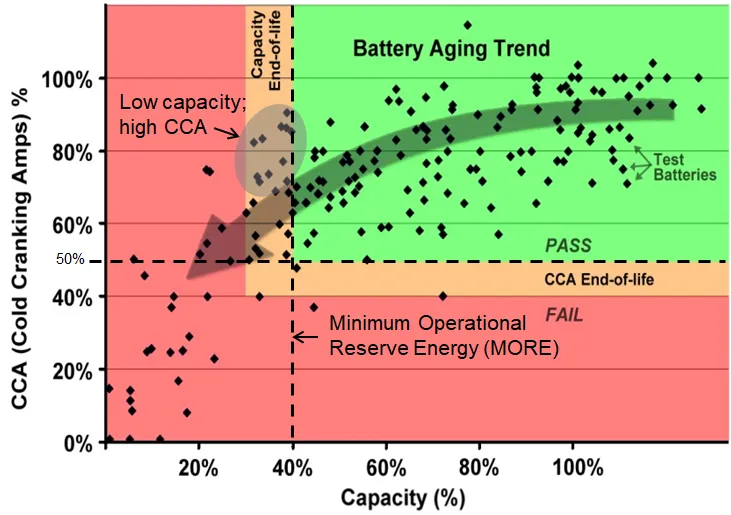
Measure both capacity and cold-cranking amps (CCA). A battery can still crank well even as the energy available for hotel loads declines. Set the capacity threshold around the bus’s accessory load, route, and service interval.
Use the 50% example as a starting point for discussion. The appropriate threshold depends on the battery, the application and the reserve needed before the next charge or service.
From a rapid test to a service decision
Select a matrix
Choose a supported test matrix for the battery and application. Ask Cadex about compatibility before testing.
Measure battery condition
Spectro uses Multi-Model electrochemical impedance spectroscopy to assess capacity and state of charge without a full discharge test.
Review the result
Compare the reading with the required reserve and the battery’s history. Use the result to decide whether the equipment needs further checks or service.
Keep a record of each battery test
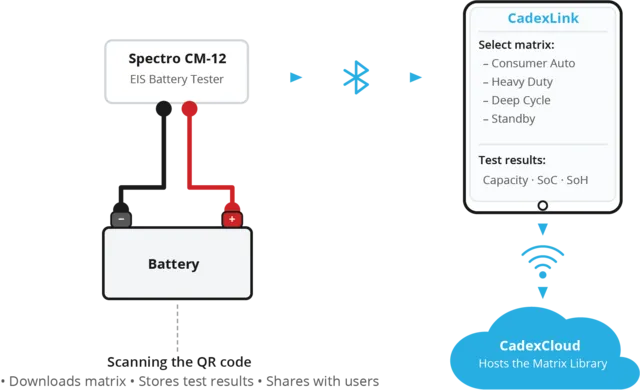
CadexLink collects test results from compatible Spectro devices and can send them to CadexCloud. Use battery identifiers to find prior records and track changes between service intervals.
Explore CadexCloudFind a test matrix for your batteries
Talk with Cadex about battery compatibility, test settings and service workflows.